This project was developed as a speculative editorial proposal for Paloma Wool—exploring how garments could exist within a moment of transition and shared domestic space.
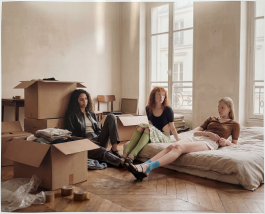
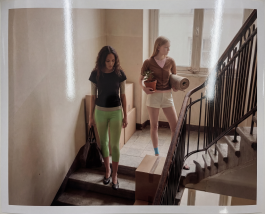
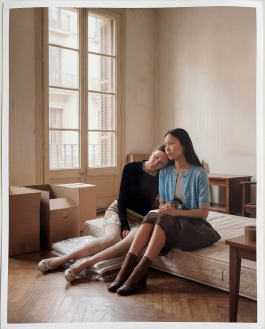
The brief was self-initiated: to imagine a campaign that felt inseparable from everyday life. The images follow a group of young women moving into a new apartment, positioning clothing not as costume but as continuity—present within gestures, pauses, and unfinished rooms.
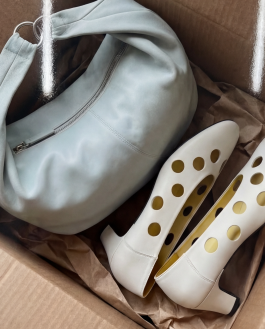
Rather than isolating the product in a traditional still-life logic, the creative direction integrates shoes and bags into the same spatial and temporal conditions as the models. Objects appear found rather than staged—resting on wooden floors, leaning against walls, placed on a mattress during unpacking.
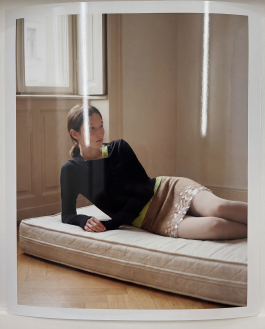
The visual language draws from contemporary European editorial photography: natural window light, warm neutral tones, architectural awareness, and understated realism. The goal was coherence—so that portraits and product images feel captured within the same day, the same atmosphere, the same space.
Artificial intelligence was used as an image-making medium to construct environments, figures, and still lifes while maintaining consistency in light, tone, and narrative direction.
This proposal reflects an interest in clothing as lived experience—quiet, relational, and embedded within context.
Client | Paloma Wool (Speculative) |
Services | Creative & Art direction, Generative AI |
Year | 2026 |


This project was developed as a speculative editorial proposal for Paloma Wool—exploring how garments could exist within a moment of transition and shared domestic space.
The brief was self-initiated: to imagine a campaign that felt inseparable from everyday life. The images follow a group of young women moving into a new apartment, positioning clothing not as costume but as continuity—present within gestures, pauses, and unfinished rooms.
Rather than isolating the product in a traditional still-life logic, the creative direction integrates shoes and bags into the same spatial and temporal conditions as the models. Objects appear found rather than staged—resting on wooden floors, leaning against walls, placed on a mattress during unpacking.
The visual language draws from contemporary European editorial photography: natural window light, warm neutral tones, architectural awareness, and understated realism. The goal was coherence—so that portraits and product images feel captured within the same day, the same atmosphere, the same space.
Artificial intelligence was used as an image-making medium to construct environments, figures, and still lifes while maintaining consistency in light, tone, and narrative direction.
This proposal reflects an interest in clothing as lived experience—quiet, relational, and embedded within context.